The Council of Bishops is hosting a Leadership Gathering at Knox United Church in Calgary, Alberta, Canada, October 20–24, 2026. Nearly 300 United Methodists from around the world have been invited to worship, listen and discern together about the future of The United Methodist Church. In preparation for this event, every participant has been instructed to complete ten sentences before coming to the gathering. (https://www.resourceumc.org/en/content/leadership-gathering-program)
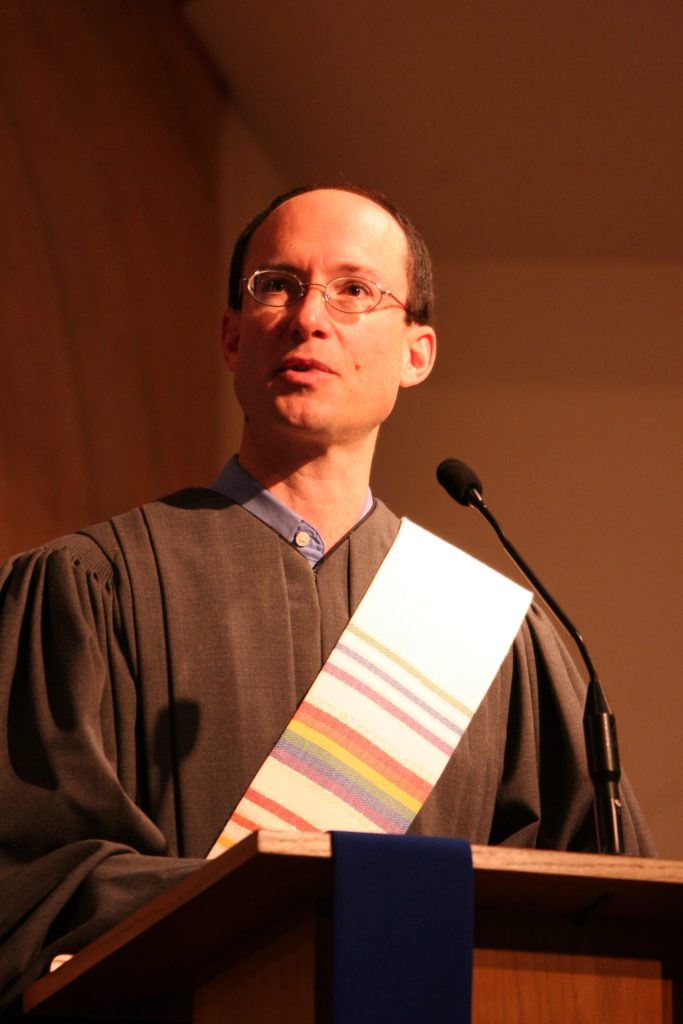
Although I am not an invitee to the Leadership Gathering, I have provided my responses, below. Most of my thoughts pertain to creating better denominational structures to support relationships across the UMC and to reckon with past harms perpetuated by this church. Readers of my book Reckoning Methodism: Mission and Division in the Public Church will recognize familiar themes. How would you answer these prompts about envisioning the future of the UMC?
Homework Assigned by the Council of Bishops
The reality we believe the Church must address is… (A concise statement naming the most pressing reality identified through the discernment process.)
The UMC must reckon with its structures of empire and patterns of dependency and patronage. As a case study, we need to come to terms with our failed twenty-year (2004–2024) partnership with the Methodist Protestant Church of Côte d’Ivoire. What motivated United Methodists to acquire this denomination and what went wrong? http://www.umglobal.org/2024/06/darryl-w-stephens-united-methodists-in.html.
The opportunity God is placing before The United Methodist Church is… (Name the greatest opportunity revealed through your conversations.)
The UMC has an opportunity to develop relationships organically rather than legislatively across many cultures, nations, and languages. What if United Methodists from across the world gathered to worship, pray, discern, and nurture relationships—instead of meeting to legislate and vote? The Leadership Gathering held at Knox United Church in Calgary, Alberta, Canada, October 20–24, 2026, could model a way of connecting across the UMC that does not rely on an adapted form of Robert’s Rules of Order.
We believe the Holy Spirit is inviting the Church to… (Complete with a clear action or direction rather than a vague aspiration.)
What if the Holy Spirit is inviting the UMC to unleash Methodism from its own bureaucracy? Can we reimagine the nature of our global connection from one of shared rules to one of shared commitments? The envisioned “General Book of Discipline” could be filled with more theology and less administrative minutiae. Consider adding This Holy Mystery and By Water and the Spirit and removing hundreds of paragraphs of “thus-and-such committee shall,” thereby allowing for local innovation and regionally contextualized ministries.
If The United Methodist Church is to be more fully empowered by the Holy Spirit, loving boldly, serving joyfully, and leading courageously, we recommend… (List your three to five highest-priority recommendations.)
At the denominational level, I recommend:
- Holding significant global gatherings in languages other than English and in locations other than the United States.
- Examining inequities of denominational funding, accountability, and control so that money is not the primary determiner of decision-making power and relationships.
- Reckoning with our past, particularly regarding racism, neocolonialism, US-centrism, and treatment of indigenous populations.
- Discussing disparities in our missional understandings and motivations.
- Eliminating majority-rules voting on denomination-wide legislation at General Conference.
The Church should STOP… (Identify practices, assumptions, structures, or habits that no longer advance the Church’s mission.)
The UMC should stop majority-rules voting on denomination-wide legislation at General Conference. Reliance on an adapted form of Robert’s Rules of Order should end. Instead, a denominational body could adopt a process of consensus decision-making, such as that practiced by the World Council of Churches. https://www.oikoumene.org/about-the-wcc/consensus-decision-making.
The Church should START… (Identify new ministries, practices, structures, or ways of thinking that should be embraced.)
The UMC should start holding significant global gatherings in languages other than English and in locations other than the United States. It is past time for the most affluent and privileged demographic in the UMC to apply for their travel visas and don their simultaneous interpretation headsets.
The Church should REDESIGN… (Identify existing systems that should be adapted rather than simply preserved or eliminated.)
The UMC should redesign its financial structures to address inequities in denominational funding and expenditures, including the General Conference budget, boards and agencies, and bishops’ salaries and support. See David W. Scott, “The Economics of International Mission,” in The Practice of Mission in Global Methodism Emerging Trends From Everywhere to Everywhere, edited by David W. Scott, Darryl W. Stephens, 41–55 (Routledge 2021).
If we could test one bold experiment over the next two to three years, it would be… (Describe one practical experiment that could be implemented and evaluated.)
Hold no votes at General Conference 2028. Delegates meeting in 2028 would be challenged to discern other purposes for gathering: What tangible, material, and spiritual work contributes to nurturing denominational relationships at General Conference aside from voting on legislation?
For this vision to become reality, these people must be at the table… (Identify essential stakeholders, missing voices, partners, and collaborators—including young people, global voices, local churches, bishops, clergy, laity, agencies, seminaries, and others as appropriate.)
Too many times in the UMC we see the same faces and hear the same voices at denominational gatherings. To broaden our based of wisdom and experience, hold at least one additional leadership gathering informed by the wisdom of different leaders. The Leadership Gathering held at Knox United Church in Calgary, Alberta, Canada, October 20–24, 2026, includes many essential stakeholders—its invitees comprise a representative, not exhaustive, list of voices. What if a similar gathering were held again in 2–3 years, with an entirely different list of invitees?
Our hope for the future of The United Methodist Church is… (A concise vision statement (one or two paragraphs) describing the Church they believe God is calling into being.)
Let this be our witness: “in Christ God was reconciling the world to himself, not counting their trespasses against them, and entrusting the message of reconciliation to us. So we are ambassadors for Christ, since God is making his appeal through us; we entreat you on behalf of Christ: be reconciled to God” (2 Corinthians 5:18–19, NRSVUE)
The United Methodist Church can model what it means to be ambassadors for Christ, sharing the message of reconciliation. This church can learn to nurture relationships of mutuality and trust across boundaries of culture, class, race, nationality, language, and geography. Can we do so in ways that do not replicate existing inequities and structures of patronage and dependency?
Yes, we need to love boldly, serve joyfully, and lead courageously. And, we need to reckon with our past failings and present structures that inhibit reconciliation with each other, our communities, and God. We must interrogate what motivates our boldness, joy, and courage and how those motivations are similar to or different from our past racist, nationalistic, and neocolonial efforts to expand our own influence across the Earth.